RV sleep guide
When Springs Travel: Understanding Innerspring Mattresses in Compact Sleep Spaces
An innerspring mattress can feel familiar, cool and responsive. In an RV, camper van or other compact sleeping space, however, comfort depends on more than the feel of the coils. Dimensions, weight, movement, ventilation and the bed platform all matter. A mattress that suits a conventional bedroom may not fit a mobile one—or behave the same way once it does.
Published November 6, 2026
In a house, a bed is usually a fixed point. In a recreational vehicle, it is one element in a tightly planned interior, sharing its boundaries with cabinets, walls, storage compartments and sometimes a passageway. A mattress has to fit that arrangement without blocking a hatch or pressing hard against a wall. It must also remain comfortable as the vehicle moves, changes temperature and spends time closed up between trips.
Innerspring mattresses bring a long-established design to that challenge. Beneath the fabric and cushioning, a network of metal coils provides the primary support. The result can feel buoyant and responsive, with air moving through the open spaces between coils. But “innerspring” describes a broad family, not a single feel or performance level. Coil shape, gauge, arrangement, padding and edge construction all influence how a mattress behaves.
For mobile sleep, the central question is not whether springs are inherently better or worse than foam. It is whether a particular mattress matches the bed platform, the available space and the sleeper’s needs. Careful measurement and a realistic assessment of movement can save the trouble of hauling an unsuitable mattress through a narrow doorway—or discovering after installation that it crowds the room.
What an innerspring mattress is made of
The coil unit is the mattress’s support core. Depending on the design, it may use interconnected coils, individually wrapped coils or other spring arrangements. In a connected system, coils are linked so movement in one area can influence nearby areas. Individually wrapped coils sit in fabric pockets and can respond more independently, though the full mattress still includes layers that may transmit movement.
Above the support core, comfort layers soften the surface and shape the initial feel. These may include cotton, wool, foam or other padding. The cover and quilting add another element. Two mattresses can both be called innerspring while differing substantially in firmness, contouring, temperature feel and motion response. The label alone does not tell a buyer how the bed will feel after several nights.
Coil count is often used as shorthand, but it is not a complete measure of quality or comfort. Counts are meaningful only in context: mattress size, coil design, wire thickness, layout and the rest of the construction all play a part. A higher number does not automatically mean stronger support or a more comfortable surface. When comparing options, look for clear construction details and pay attention to the manufacturer’s guidance about use and compatibility.
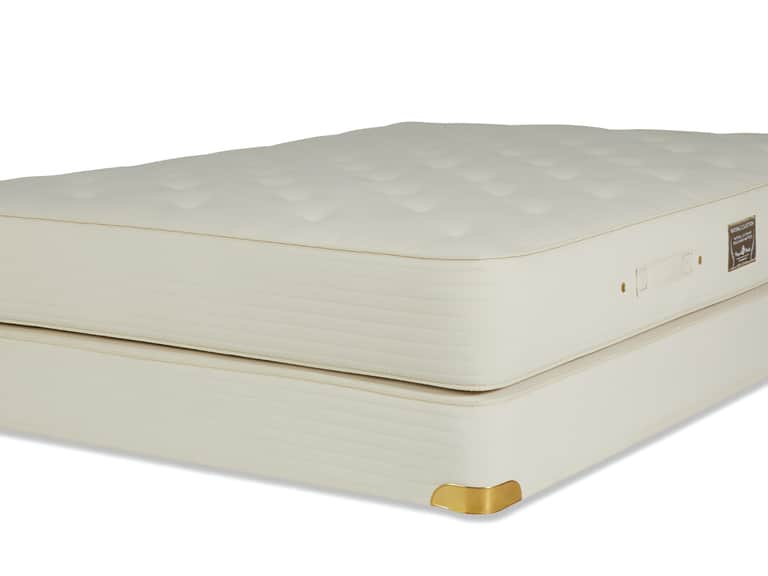
One example of a traditional construction is the Royal-Pedic Natural Cotton Mattress with Wool Wrap. Its listed design combines a Royal-Flex innerspring system with cotton padding and a wool wrap, and it is described as an orthopedic-firm mattress approximately 9.5 inches thick. That description can help illustrate how springs and comfort materials work together. It is not, by itself, evidence that the mattress will suit a particular RV: its dimensions, weight, access route and compatibility with the vehicle’s platform must be checked independently.
Support is a system, not a sensation
People often use “support” to mean several things at once: a firm surface, a feeling of being held level, less pressure at the shoulders and hips, or a bed that does not sag. These are related but not identical. A mattress can feel firm at first contact yet fail to maintain a comfortable, neutral sleeping position for a particular sleeper. Conversely, a softer surface may still provide adequate support when its underlying construction is well matched to the body and sleeping position.
In an innerspring mattress, support depends on the spring unit and the layers above it, as well as on the base beneath it. The platform should offer the kind of support the mattress maker specifies. Gaps that are too wide, an uneven surface or an unsupported section can affect how the mattress performs and may contribute to premature wear. Before buying, check the platform design and any requirements for slats, a solid deck or a compatible foundation.
Sleeping position matters, too. Side sleepers often notice pressure at the shoulders and hips if the surface is too hard or the comfort layers too thin. Back sleepers may prefer a balance that keeps the torso from sinking excessively while still easing pressure. Stomach sleepers may be sensitive to sagging around the middle. These general observations are not a substitute for individual testing, but they help clarify what to assess when trying a mattress or reviewing its construction.
A mattress cannot diagnose or treat back pain. Persistent or worsening pain, numbness or other concerning symptoms deserve attention from a qualified health professional. For ordinary comfort decisions, a useful test is whether the bed allows a relaxed, supported position without persistent pressure or an obvious dip. Allow for adjustment: a new mattress can feel different from the one it replaces, and a brief showroom test cannot reproduce every night of use.
The movement question: sleeping beside someone else
In a compact bed, partners are close by definition. The spring system and comfort layers influence how much movement travels across the surface when one person turns, gets up or changes position. A connected coil unit may transmit more movement from one side toward the other than a design with more independent coils, though the actual result depends on the mattress as a whole. Padding can absorb or soften some motion; a thin or especially responsive surface may make movement more noticeable.
Try to evaluate motion in realistic terms. If possible, lie on the mattress with another person and notice whether ordinary shifts disturb your position. If an in-person test is not available, seek clear information about the coil type, comfort layers and return or trial arrangements. A product’s construction can offer clues, but it cannot guarantee how two particular sleepers will experience movement.
Room to move is another part of the equation. In a narrow RV bed, the person nearest the wall may have little space to change position or get out without disturbing the other sleeper. Mattress thickness, edge stability and the shape of the platform can all affect this daily choreography. Consider the entire sleep setup, not only the center of the mattress: access, bedding, pillows and clearance around the bed contribute to comfort.
Measure the bed—and the route to it
“Queen” and “short queen” are useful descriptions, but labels are not reliable substitutes for measurements. RV manufacturers may use nonstandard dimensions, and the shape of a platform can include clipped corners, curves or other details that a rectangular mattress will not match. Measure the usable bed surface directly, rather than relying only on a brochure, an old mattress tag or a seller’s general size name.
Use a tape measure to record length and width at several points. If the platform is not perfectly square, note the variation and mark the outline of any angled corners. Measure height restrictions as well: a thick mattress can interfere with a window, overhead cabinet, folding mechanism or safety rail. Record the size and position of any cutouts or obstructions, and check whether the mattress must sit flush against a wall.
Then consider the delivery path. A mattress may fit the platform but be difficult to maneuver through a door, hallway or tight turn. Check the vehicle’s entry opening, interior passage and any doors between the entry and sleeping area. Ask whether the mattress arrives compressed, folded or full-size, and whether that delivery method is suitable for its construction. Do not assume a spring mattress can be bent or folded without damage; follow the manufacturer’s handling instructions.
- Measure the platform: record length, width, corners and any irregular contours.
- Check clearances: account for cabinets, windows, rails, doors and storage access.
- Confirm mattress thickness: consider bedding, headroom and nearby moving parts.
- Measure the access route: include exterior doors, interior turns and narrow passages.
- Verify terminology: get the exact dimensions in inches or centimeters, not just the size name.
Precision matters because even a small mismatch can have consequences. A mattress that is too wide may buckle against a wall; one that is too short can leave an unsupported gap. A close fit may also limit airflow around the sides. If the platform has unusual geometry, provide a measured drawing to the mattress maker and ask whether the proposed product is designed to accommodate it.
Weight, access and the mobile setting
Weight deserves attention in an RV, where every component contributes to the vehicle’s total load. The mattress must be manageable during installation, but its ongoing weight also belongs in the broader payload calculation. Check the vehicle’s ratings and consult its documentation rather than estimating what it can carry. A heavier mattress may be perfectly workable in one setup and a poor choice in another, especially if frequent removal is necessary to reach storage underneath.
Consider how the bed is used. Some RV mattresses rest on fixed platforms; others sit above storage, fold into a seating area or form part of a convertible arrangement. A traditional innerspring mattress may be less adaptable to frequent folding than a purpose-designed flexible sleep surface. If the mattress must lift for access, its weight, shape and grip points become practical issues. Confirm that the bed’s hinges, supports and lifting hardware are intended for the combined load.
Travel adds a further distinction: a mattress is used while the vehicle is parked, not as a substitute for a seat or restraint during transit. Secure the mattress and loose bedding as appropriate for travel, and follow the vehicle maker’s instructions about interior items. Do not modify a bed platform or attach restraints in a way that could compromise the vehicle’s structure or safety systems.
Airflow and moisture in a small room
Open spaces within a coil unit can allow air to circulate through the mattress more readily than some dense constructions. That can contribute to a less enclosed feel, but it does not make every innerspring mattress cool, nor does it solve moisture problems beneath the bed. Comfort layers, bedding, room temperature, ventilation and the sleeper’s own preferences all affect the sleep climate.
In a vehicle, condensation and limited airflow can make mattress care especially important. Moisture may collect beneath a mattress when warm, humid air meets a cooler surface. A bed pressed tightly against walls or placed on a poorly ventilated base may dry slowly. Follow the mattress maker’s guidance for the required foundation and care. Where the design allows, periodically inspect the underside and the platform, and air the space when conditions are suitable.
Use a protector only if it is compatible with the mattress and does not create a heat or moisture barrier that undermines comfort. Keep bedding clean and dry, and address spills promptly according to care instructions. Avoid soaking the mattress or applying cleaning products that the manufacturer has not approved. If there is a persistent musty odor or visible mold, identify and correct the moisture source; surface cleaning alone may not be enough.
When springs may—or may not—make sense
An innerspring mattress may appeal to someone who likes a responsive, buoyant feel and wants a design with a familiar support structure. Depending on construction, it may also offer useful airflow and a stable surface. Those qualities can make springs worth considering for an RV, but they are not automatic advantages in every compact setup.
The style may be less suitable when the bed requires frequent folding, when a mattress must be lifted regularly, or when access dimensions make a conventional unit difficult to install. Some sleepers are especially sensitive to motion transfer, firm edges or the sensation of coils. Others may prefer the closer contouring of a different construction. The choice should reflect the specific mattress and the specific sleeper, not assumptions about an entire category.
Compare an innerspring mattress with alternatives by asking the same questions of each: Does it fit the platform exactly? Is its thickness compatible with the room? Can it be brought through the entry? Does its support feel appropriate? How does it respond to movement? What care does it need, and what does the maker say about ventilation and foundation support? A consistent checklist makes comparisons more useful than broad claims that one material is always superior.
A practical evaluation before choosing
Start with the vehicle, not the shopping category. Write down the platform dimensions and constraints, then identify the sleeping positions and preferences of everyone who will use the bed. If two people share it, make motion transfer part of the evaluation. If the bed converts or covers storage, account for those functions before considering surface feel.
Next, read the specifications closely. Look for actual dimensions, finished height, approximate weight, coil arrangement, comfort-layer materials, foundation requirements and care instructions. Ask the maker about any unanswered questions, particularly around irregular platforms, bending during delivery and warranty implications. A clear answer is more useful than a general assurance that a mattress is suitable for “most RVs.”
If you can test the mattress, spend enough time in your usual sleeping positions to notice pressure and alignment. A few seconds sitting on the edge will not reveal how the bed feels after an hour. When testing is impossible, review the return terms carefully and find out who pays shipping, how long the trial lasts, and what condition the mattress must be in. Terms can differ, so confirm them before purchase.
- Does the mattress match the platform’s measured dimensions and shape?
- Can it pass through every opening and turn on the route to the bed?
- Is its weight practical for the vehicle, installation and storage access?
- Does the mattress-maker approve the platform or foundation design?
- How does the surface feel in your usual sleeping position?
- Is movement from a partner noticeable enough to affect rest?
- Can the mattress and space beneath it be kept clean and dry?
The right fit is more than a number
Compact sleep spaces expose the details that a spacious bedroom can hide. A mattress that is a little too thick can block a cabinet; a bed that feels comfortable alone can become restless when shared; an otherwise promising construction may be awkward to carry through a narrow RV doorway. Innerspring design offers a range of support and feel, but the coils are only one part of the decision.
Measure carefully, check the full construction and think through how the bed works during both travel and rest. Assess support as a personal experience rather than a specification alone. Pay attention to movement, moisture, platform requirements and the practical work of installation. Those details turn a mattress search from a guess into a considered fit—and help make the small sleeping space feel less like an afterthought and more like a dependable place to land.